
The practice happens inside the work.
An activity takes around 10 to 15 minutes. Leaders then practise the behaviour in the conversations and decisions they're already having, not in a training room.
For HR and L&D, learning providers and coaches
Each leader knows what to practise, gets the right things to practise, and gets the chance to practise it in real work. Then you both see what changed.
28 days free. No credit card. No automatic subscription. You decide whether to continue.
Built by Scott Hunter from 18 years in the Prison Service, where trust decided outcomes. About Scott
The problem
And when someone asks what changed, there is little to show. For practice to carry, leaders need to know what to practise, have the right things to practise, get the chance to practise at work, and see what changed. Miss one and the practice drifts.
Your leaders know what to do. Doing it when it counts is the hard part. The course made sense at the time, and the moment to use it arrives on a Tuesday afternoon, when they are behind, with the one person they find hardest to be straight with. That moment is where development is decided, and it is not decided by whether they remembered the model.
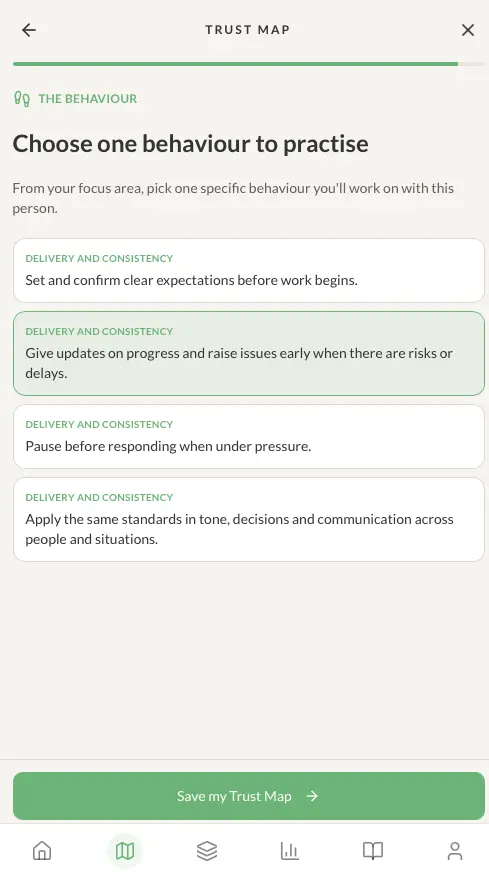
Know what to practise. Not ten things to work on. One behaviour, chosen for a reason: one they do least often, or one that an important person needs more of from them.
Get the right things to practise. Short activities written for that behaviour, in a sensible order, that fit a busy week.
Get the chance to practise, at work. They have at least two days to try it for real, see how the other person responds, and adjust. Confidence that came from doing it beats being told it works.
See what changed. Dated reflections in their own words and a re-score, so your next conversation starts from what happened rather than what they remember.
Which leaves you the practical question: how do you give forty leaders that, without taking them off the job?
You don't take them off the job. You make the job the practice. Each leader works on one behaviour with one real person, through activities of 10 to 15 minutes that fit a normal week. Your sessions set the focus, and the Hub carries the practice in between, with a dated record of what changed.
How we help
An activity takes around 10 to 15 minutes. Leaders then practise the behaviour in the conversations and decisions they're already having, not in a training room.
Each leader works on one behaviour in one real working relationship. They get at least two days to try it before they reflect, and reminders bring them back.
Reflections, check-ins at 14, 30 and 60 days, and a Cohort Impact Report give you more to review than attendance and a satisfaction score.
Each leader's Trust Map points them to the behaviour that matters, and a prepared Behaviour Playlist is ready for it. The activities are already written, so your time goes on the programme around them rather than on the materials.
How it works: the Trust Journey
Your sessions set the focus. The working day provides the practice. You keep the judgement.
Who it’s for
Each leader works on a relationship of their own. The person supporting them chooses the focus and reviews what happened.
Give leaders a behaviour to practise in their own work, with Reflection keeping a thread through the programme.
See it for HR and L&DUse the commissioned session to set the focus. The Hub carries the practice into the client's workplace afterwards.
See it for learning providersHelp a client practise one behaviour at work and bring their Reflection back to the next session.
See how coaches use itRunning a leadership programme? Check it against the four stages: twelve quick questions and a summary of where to start.
Trust Leader definitionTrust is someone's confidence in you with something they care about.
Why trust
Trust is the other person's decision, shaped by how they experience your behaviour. That makes it something a leader can work on.
Trust Leader gives leaders five Trust Questions to decide where to focus, 20 behaviours that strengthen trust and 20 that erode it.
Where it comes from
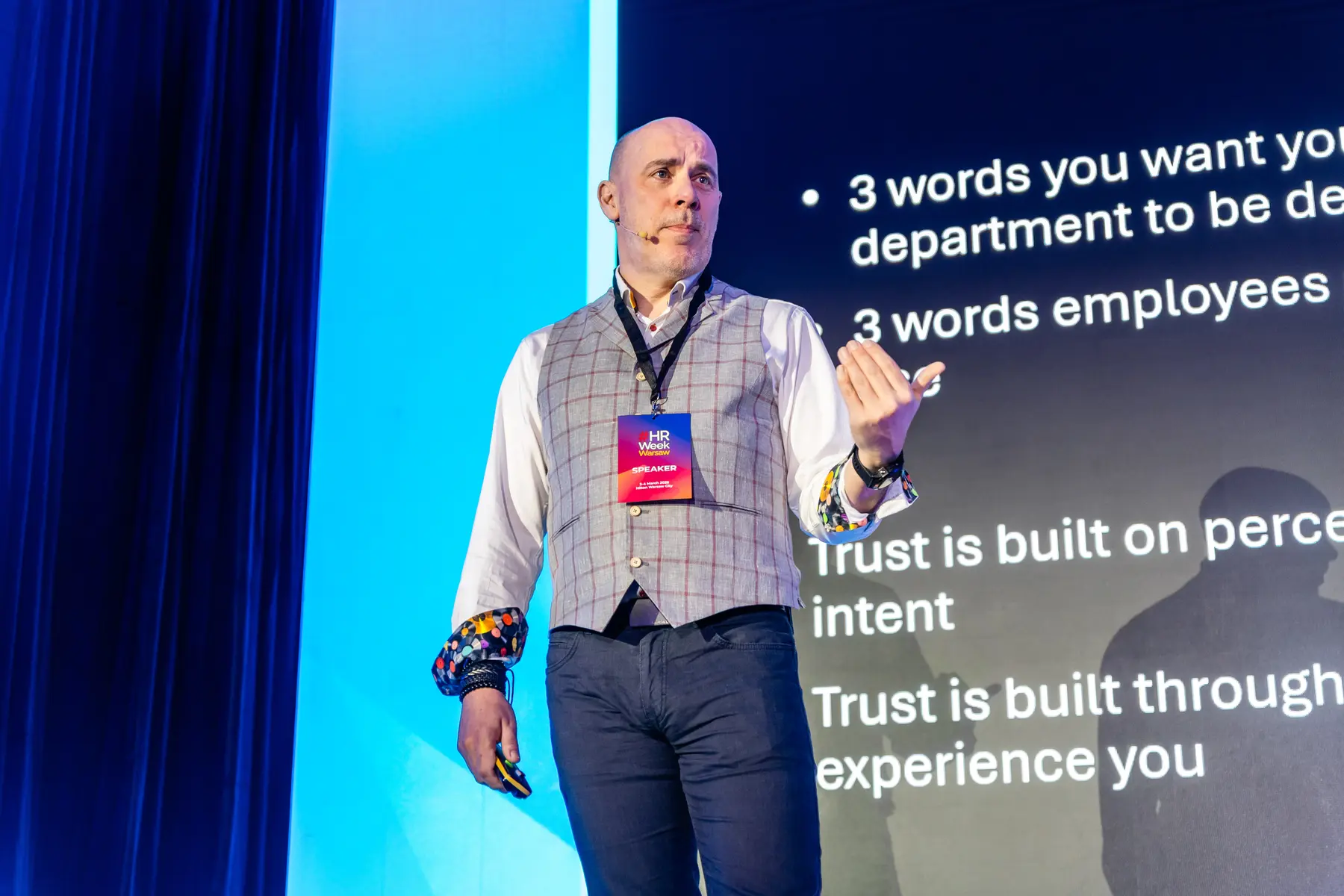
Much of my understanding of trust was shaped in the Prison Service. Trust affected what people were willing to tell me, what they would rely on me with and how they responded when pressure rose.
I also saw development from both sides. As an operational manager, I wanted my staff to grow, and I still needed the work covered. Later, working in training, I was the one asking managers to release people. Both sides wanted people to develop, and the pressure to keep the work moving pulled against it every time.
As a trainer and consultant since, I've seen how hard it is for learning to survive the return to work. In my experience, leadership programmes struggle to show what changed for each person. Trust Leader brings those experiences together: trust understood through behaviour, and development practised in the work people are already doing.
About ScottIn their words
“It is an innovative style, it shares new ideas and exercises clearly and easily. Above all, the exercises will make a difference straight away, in any conversation.”
ColinRecommendation on LinkedIn
“Really impressed by the quality, very simple to follow but also very comprehensive. An amazing tool for any organisation trying to create more trust and behaviour change in their leadership teams.”
JamesRecommendation on LinkedIn
“Scott gets right at the core drivers of trust. It is very impressive.”
LisaRecommendation on LinkedIn
Evidence and its limits
A completed course shows that someone completed a course. It doesn't show whether anyone experienced different behaviour.
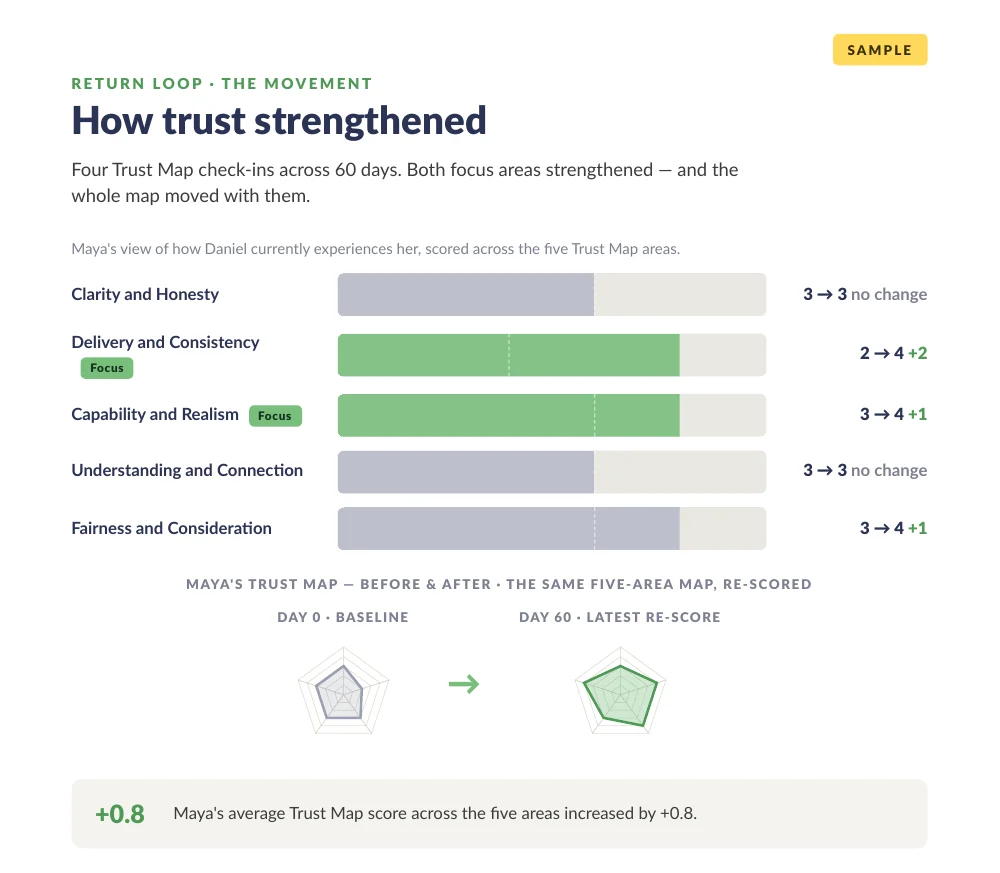
Recorded Reflection makes applied practice visible. Leaders record what they noticed, tried and experienced, with a date, so practitioners and programme leads can see reported movement over time.
Reflection is self-reported, so we describe it as evidence of practice and reported movement.
What you get to review
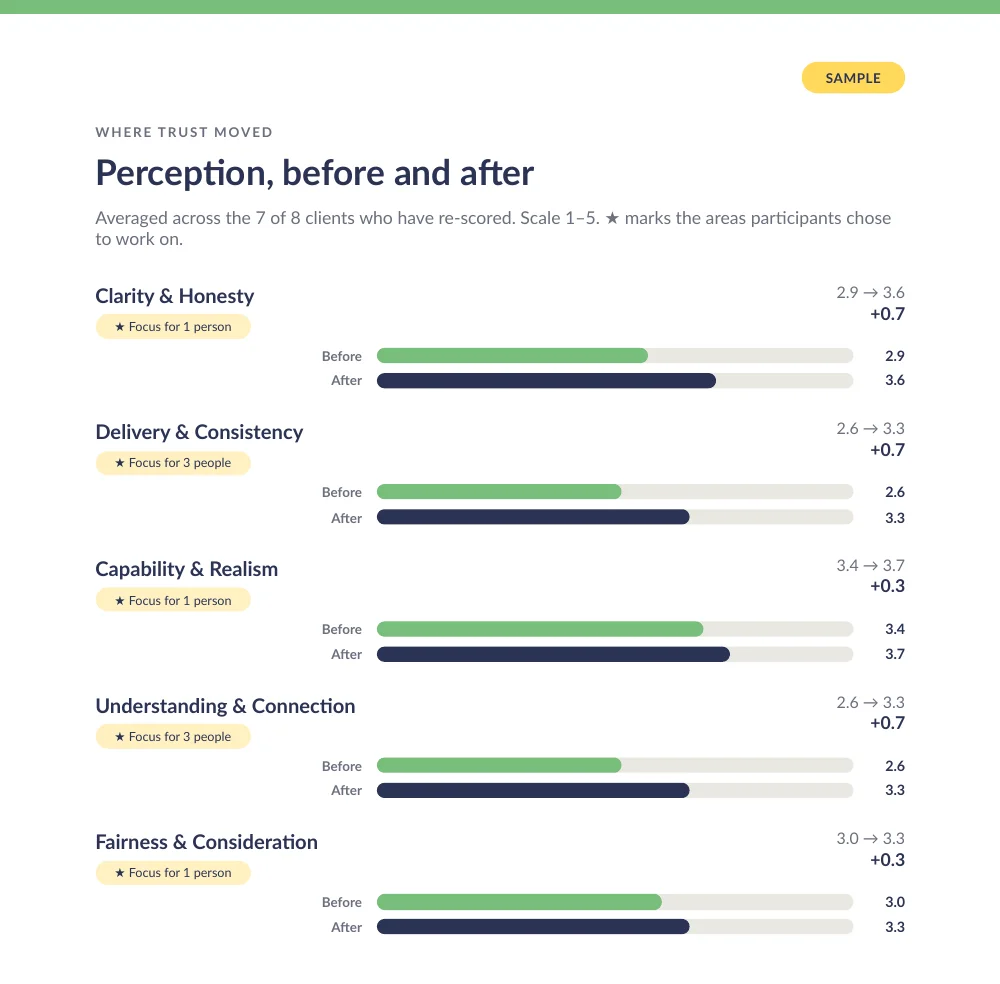
Each leader keeps a Trust Journey: where they started, what they practised and what moved. Once five or more people have taken part, you also get the group view for a sponsor or programme review. Both come from practice at work, not course completions.
Insights
Plain answers for people who develop leaders.
The whole approach in a single, everyday moment.
Read the guideMove from “do they trust me?” to something specific.
Why the better question is where the practice happens.
Look for dated signs of change, not a final verdict.
Questions answered plainly
The Trust Leader Hub is an online platform that helps HR and L&D teams, learning providers and coaches support leaders to practise the behaviours that strengthen trust. A leader chooses one behaviour to practise, either from the Self-Assessment (their behaviours in general) or a Trust Map (one specific working relationship), practises it through short activities during the working day, and records a Reflection on what happened.
It is built first for HR and L&D in organisations of around 50 to 250 people, including those with no dedicated L&D team, and for smaller learning providers who deliver leadership programmes. Coaches use it to keep practice going between coaching conversations.
No. Your facilitated time sets the focus and introduces the practice. The Hub supports what happens afterwards, in the conversations and decisions leaders already have at work. The practitioner keeps the professional judgement.
An activity takes around 10 to 15 minutes, and the Reflection afterwards takes a few more. The practice in between happens in conversations and decisions the leader is already having, so what you are releasing them for is minutes, not days away from the work. A pilot is the best way to measure how much time it takes in your setting.
Reflection is a dated record of what a leader noticed, tried and experienced after practising. It gives a practitioner far more to review than course completion, and it shows reported movement over time.
Start the free 28-day trial. No credit card is taken and there is no automatic subscription. Paid access starts at 5 seats for £75 a month or £750 a year, excluding VAT, and the price per seat falls as you add more. For a 90-day pilot, or more than 100 seats, talk to us.
Start here
Try it on one of your own working relationships first. Then paid access starts at 5 seats for £75 a month or £750 a year, excl. VAT, and the price per seat falls as you add more. See seat pricing.
Start your free trialYou will continue securely to the Trust Leader Hub to create your account.Trust Telegraph
Short, practical thinking for people whose work depends on other people’s confidence.